



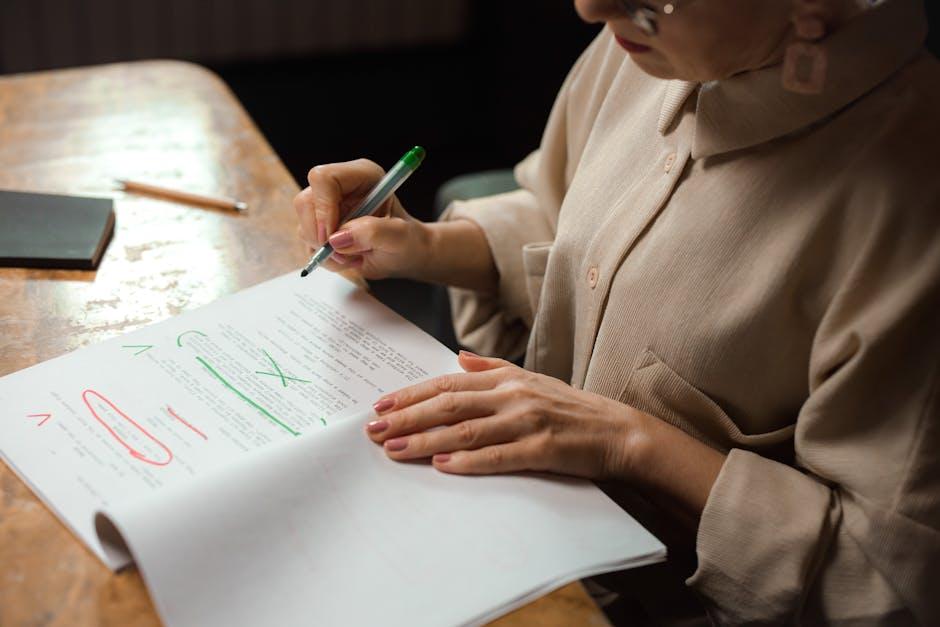
After pouring your heart and soul into crafting a compelling essay, it's easy to feel like you're done. But hold on! The final touches of proofreading and editing are crucial for ensuring your essay shines. Imagine you've just finished a beautiful painting. The brushstrokes are done, but a final polish can elevate it from good to exceptional. The same goes for your essays. Proofreading and editing are like that final polish, taking your work from good to great.
Proofreading is all about catching those pesky errors that can detract from your essay's clarity and professionalism. Think of it like a final sweep through your essay to make sure everything is in its place. Imagine writing "their" instead of "there" - a small mistake, but it can make your essay look sloppy.
Focus on grammar, spelling, punctuation, and capitalization. Is every comma in the right place? Did you accidentally capitalize a word that shouldn't be? These little details matter! For example, using "its" instead of "it's" can completely change the meaning of a sentence.
A great tip is to read your essay aloud, sentence by sentence. This helps you catch awkward phrasing or repeated words. You might even find yourself saying a sentence in a way that sounds clunky or confusing. This is your chance to fix it!
Finally, use a spell checker and grammar checker, but remember they aren't foolproof. Sometimes they miss mistakes, or even suggest changes that don't make sense. Always double-check their suggestions to make sure they fit the context of your essay. For instance, a spell checker might not catch a misused word like "to" instead of "too."
Editing goes beyond just fixing errors; it's about refining your writing to make it more impactful and engaging. It's like taking a rough draft and shaping it into a polished gem. Think of it as a chance to make your essay sing!
- Check for clarity: Is your argument easy to follow? Can someone reading your essay understand the main points you're trying to make? Imagine you're explaining your essay to a friend who hasn't read it. Would they understand? If not, you might need to add more explanations or transitions to guide your reader. For example, if you're arguing that social media has a negative impact on teenagers, make sure you clearly explain why and provide evidence to support your claim.
- Evaluate your word choice: Are you using strong, descriptive language? Are there any unnecessary words or phrases that you can cut out? For example, instead of saying "The character was very brave," you could say "The character's bravery was evident in their actions." This uses stronger language and avoids unnecessary words like "very." Also, be mindful of using jargon or overly complicated words that might confuse your reader.
- Consider your sentence structure: Are your sentences varied in length and structure? Are there any run-on sentences or fragments? Varying your sentence structure keeps your writing interesting and prevents it from becoming monotonous. For example, try mixing short, punchy sentences with longer, more complex sentences. Also, make sure each sentence is complete and grammatically correct. A run-on sentence combines multiple sentences without proper punctuation, while a sentence fragment is missing a subject or verb. For example, instead of writing "The dog barked at the mailman, he ran away," you could write "The dog barked at the mailman. He ran away." This separates the two complete thoughts into two distinct sentences.
Now that you've poured your heart and soul into your essay, it's time to polish it to perfection! Proofreading and editing are your secret weapons for transforming a good essay into a truly outstanding one. Here are some tips to help you master these final touches:
- Take a Break: After staring at your essay for hours, your brain might be tired and miss obvious errors. Take a break, go for a walk, or do something else entirely. When you come back to your essay with fresh eyes, you'll be more likely to catch mistakes you missed before.
- Read it Backwards: Reading your essay backwards, sentence by sentence, forces you to focus on each word and phrase individually. This helps you spot typos, grammatical errors, and awkward phrasing that you might overlook when reading normally. Imagine reading a sentence like "The cat sat on the mat" backwards. You'd notice if the word "mat" was spelled wrong or if the sentence didn't make sense.
- Get a Second Opinion: Sometimes, it's hard to see our own mistakes. Ask a friend, teacher, or family member to read your essay and provide feedback. They can offer fresh perspectives and catch errors that you might have missed. They can also help you identify areas that need further clarification or development.
- Use Online Tools: There are many free online resources that can help you with proofreading and editing. Grammarly and Hemingway Editor are popular choices that can identify grammatical errors, suggest better word choices, and even help you improve your writing style. Remember, these tools are just aids, not replacements for your own careful proofreading and editing. Always double-check their suggestions to ensure they fit the context of your essay.
For even more support, consider utilizing the resources available on Kyros.AI. Kyros.AI offers a comprehensive suite of tools and services designed to help students navigate the college application process, including:
- My Portfolio: This module allows students to record their school profiles, including courses, extracurricular activities, and more. You can even automatically generate resumes.
- Roadmap Planning: Work with your counselor to plan your courses and extracurricular activities using this module.
- College and Applications: This module helps students manage college lists and track their application progress.
These features can be invaluable as you refine your essays and prepare for college applications.
Proofreading and editing are the final steps in the essay writing process, and they're just as important as the initial brainstorming and drafting. Think of it like baking a cake: You can have the best ingredients and recipe, but without proper frosting and decoration, it won't be as appealing. Proofreading and editing are your frosting and decoration, ensuring your essay is polished and ready to impress.
Remember, everyone makes mistakes, even the best writers. Don't be afraid to revise and polish your essay until you're confident it's the best it can be. Take your time, be thorough, and you'll be amazed at the difference it makes. You've put in the hard work, now let's make sure your essay shines!